
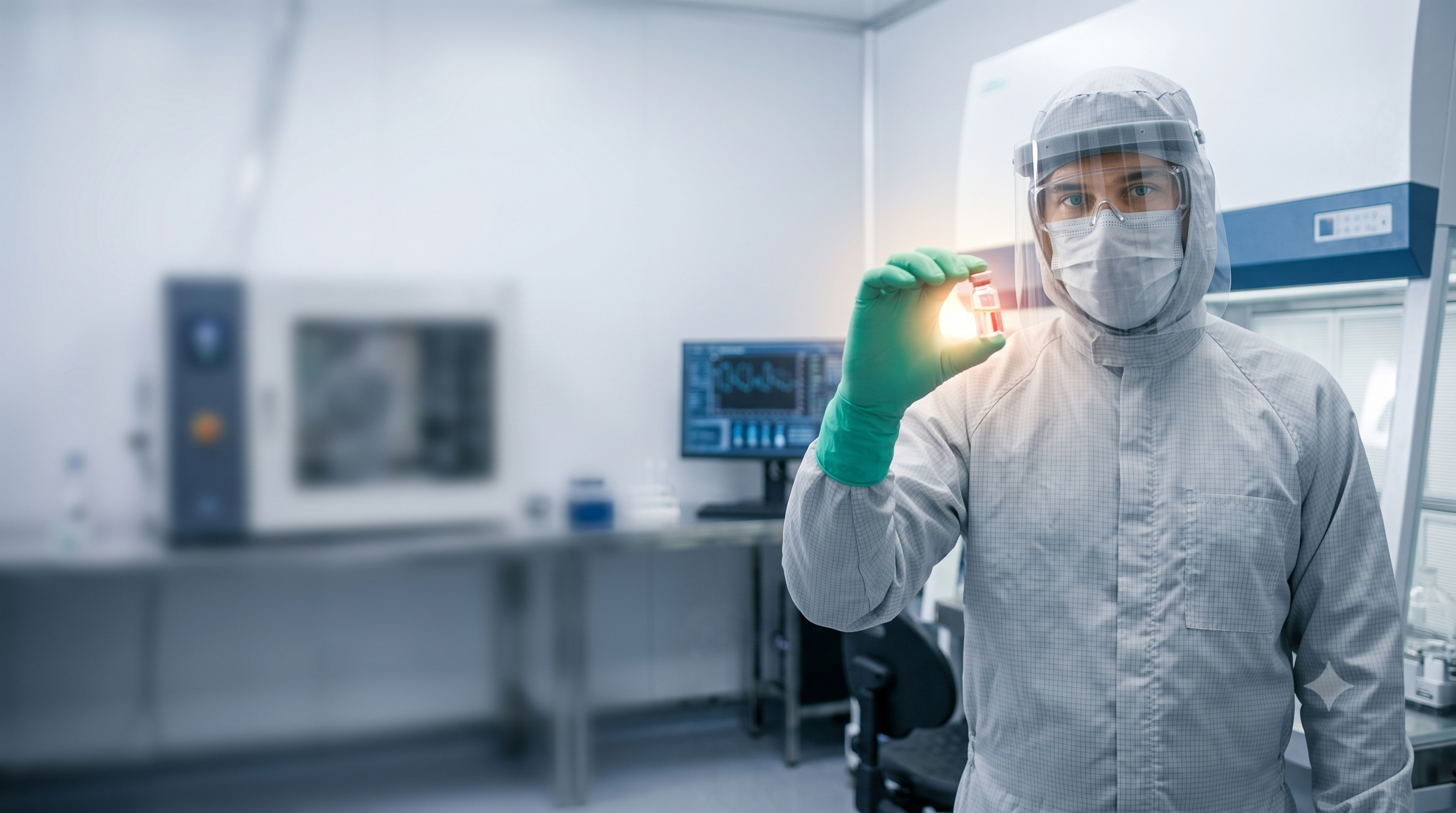
Science has never moved faster. AI-driven discovery, richer biology and a global R&D pipeline of nearly 23,000 active drugs have redefined what is possible in the lab.
But capability is not capacity
Designing a molecule is not the same as being able to make it — reliably, at scale, to GMP standard. That ability has drained out of the West and concentrated in a handful of geographies: roughly 80% of the chemistry behind Europe's medicines is now produced outside Europe.
Big Pharma went asset-light
The industry's own strategy widened the gap. Over the past two decades Big Pharma has moved its value into what it can protect — intellectual property, molecules, clinical data — and handed the physical making of medicine to CDMOs (Contract Development & Manufacturing Organisations). The model is deliberate: own the IP, rent the plant.
So the know-how and the capacity to actually produce now sit outside the innovators, spread across a fragmented, global CDMO landscape. That capacity is real and highly capable — but it is opaque, uncoordinated, and hard to match to the molecule that needs it.
And the plant evolves slowly
Manufacturing itself moves at regulatory speed. Most production is still batch, and every meaningful process change has to be re-qualified and re-filed with the authorities before it can run. The innovations that would unlock capacity — continuous manufacturing, process intensification, digital control — therefore diffuse slowly, plant by plant, filing by filing. Discovery sprints; production crawls.
The layer in between
Senfina does not build another factory. We build the intelligence and orchestration layer over the capacity that already exists — matching each molecule to the right qualified plant, with a transparent, audit-ready view across the network. Reliable Batch Manufacturing today; a distributed API Stream tomorrow.